


Sources & sourcing

Your teams monitor websites, newsletters, LinkedIn profiles, Twitter accounts, specialized databases, press feeds, and industry forums. Each of these sources has its own format, publication frequency, and access method.
The result: sourcing is the weak link in competitive intelligence. We monitor what we know, we miss what we don't know, and we waste considerable time juggling between tools.
What is needed is a radar capable of connecting all these sources, scanning them continuously and centralizing them in a single space.
Connect all types of sources in a single space
Curebot natively integrates the most commonly used sources for competitive intelligence. Add them via URL, select them from a catalog, or combine both approaches — data collection starts immediately, in all languages.

Web sources and RSS feeds. Curebot automatically detects RSS feeds associated with each URL you add. If the site doesn't offer one, the built-in RSS feed generator lets you create your own without any coding: select the areas of the page you want to monitor with your cursor, and Curebot will transform the page into a usable feed, even for JavaScript-based sites.
News engines. Google News, Microsoft Bing News, and Reddit are natively integrated. Combined with your keyword filters, they allow you to conduct exploratory monitoring of emerging topics and identify new relevant sources.
Social media. Monitor posts from LinkedIn profiles and pages, Facebook groups, and YouTube channels. Through a dedicated partnership, Curebot also offers access to social media listening with analysis of sentiment, virality, and trending topics.
Press and aggregators. Integrate feeds from leading press aggregators on the market: Factiva, Aday, Belgapress, and others. The title, a description, and the link to view the article are retrieved in compliance with distribution rights. A CFC contract guarantees copyright compliance for the press sites it represents.
TV, radio, and podcast media. Thanks to our partnership with Mediatree, receive alerts when your topics of interest are mentioned in audiovisual media. YouTube channels are monitored natively, with direct video viewing within the interface.
Tenders. The partnership with TendersPage allows monitoring of tender publications at national and international levels, with preferential rates.
Databases and forums. Connect specialized databases, forums, and search engines via their public feeds. For specific needs, dedicated API connectors can be developed.
Internal sources. Monitor the platforms in your digital environment (intranet, CRM, enterprise social network, etc.) or feed them from Curebot via automatically generated RSS feeds.
What this means for you: wherever information is published, Curebot detects it. You no longer just monitor what you know; you cover your entire information environment.
What sources for your monitoring?
Every organization has specific sourcing needs. Let's discuss yours: our team can offer you catalogs tailored to your business and support you in building your sourcing strategy.
Ready-to-use sourcing, enriched by your expertise
The quality of monitoring begins with the quality of sourcing. Curebot gives you a head start with ready-to-use source collections, compiled and maintained by the EspritsCollaboratifs team, covering a variety of business sectors and themes.

Shared source catalogs. In addition to the provided collections, each user can create their own source catalogs, share them internally, and make them available to colleagues. The goal: to leverage the expert sourcing skills of each member of the organization. The number of catalogs is unlimited.
Your sourcing is yours alone. The sources added to your platform remain strictly the property of your organization. They are never shared with other clients. Your sourcing strategy remains confidential.
AI-powered source identification. Curebot Assistant, the generative AI module, helps intelligence analysts identify new relevant sources to complement their sourcing on a topic, actor, geographic area, or sector of activity.
What it changes for you: you never start from scratch. Natively offered catalogs accelerate your startup, and collaborative sourcing capitalizes on the expertise of your entire organization.
Track the health of your sources and maintain the quality of your monitoring
Quality sourcing is sourcing that is maintained. Curebot integrates a source monitoring and maintenance module available at the bot, monitoring, catalog, and administration levels.

Anomaly detection. Unreachable or inactive sources are reported with the date they became malfunctioning.
Shared maintenance. Alone or with others, you choose to enrich and maintain your source collections. When you update a catalog (adding, modifying, or deleting a source), all bots using it automatically benefit from the update.
A dedicated search engine allows users to browse all available catalogues and view the sources they contain.
What this means for you: you don't discover that a source has died six months later. Your sourcing remains reliable, and maintenance is a collective effort, not an individual one.
Complete your monitoring with content found outside the platform
Not all strategic information comes from monitored sources. Curebot allows each user to enrich the knowledge base with resources found during their browsing, reading, or professional exchanges.
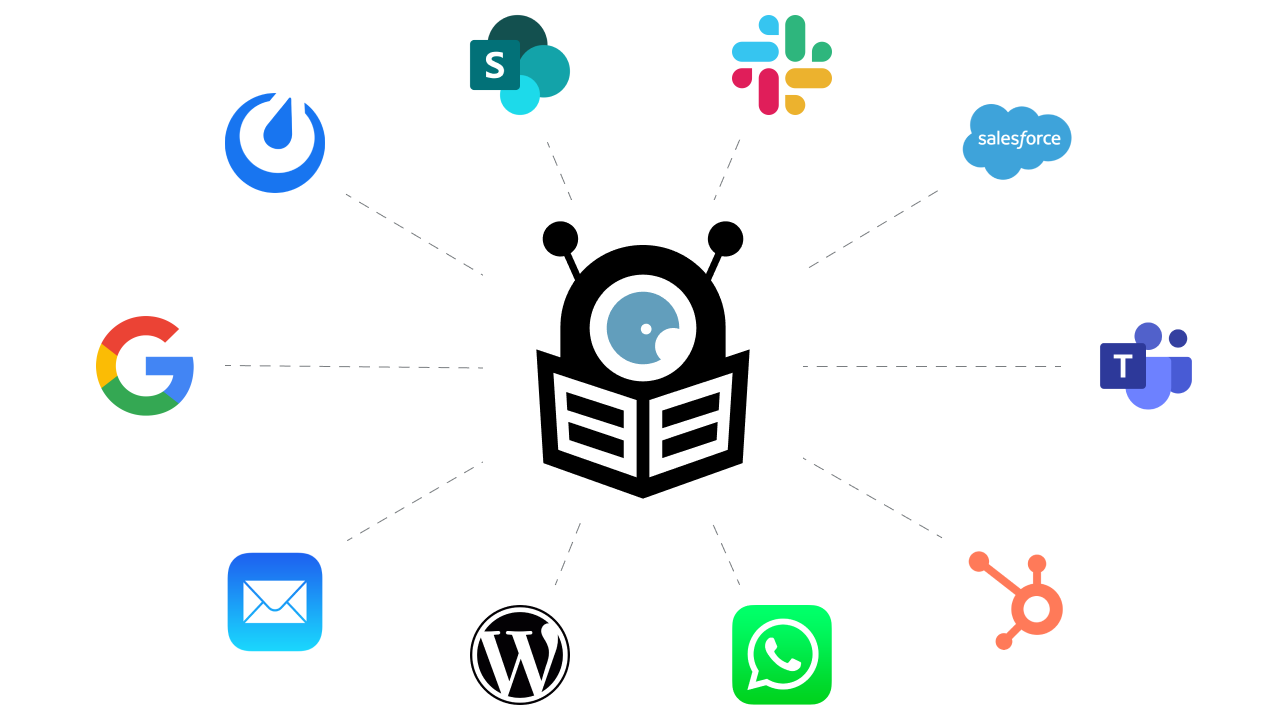
Manual addition via URL or PDF. From the Curebot interface, enter the URL of a resource found on the web, or directly import a PDF document.
Browser bookmarklet. Install the Curebot bookmarklet in your bookmarks bar: one click is all it takes to add any web page to your platform while you browse.
What this means for you: field research and serendipitous discoveries no longer languish in an inbox. They are integrated into the shared knowledge base and are immediately accessible to the entire organization.
How does it work?
Step 1
Paste the URL of the web page you want to monitor into your monitoring bot.
Step 2
Curebot automatically detects available RSS feeds. If none are found, the built-in feed generator offers to create your own by selecting the areas of the page you want to monitor.
Step 3
Preview the results to check the feed's relevance. A velocity indicator shows you the source's publishing frequency. Confirm, and collection starts instantly.